
Introduction
Commercial finance plays a vital role in helping UK businesses invest in growth, improve cash flow and respond confidently to new opportunities. Whether a business is purchasing equipment, expanding into new markets, acquiring commercial property or strengthening day-to-day working capital, access to the right commercial finance solution can provide the flexibility needed to achieve long-term success.
Today’s commercial finance market offers businesses more choice than ever before. Alongside traditional high street banks, companies can now access funding through specialist lenders, alternative finance providers and commercial finance brokers. As a result, businesses are no longer limited to a single source of funding and can compare a wide range of finance solutions, repayment structures and eligibility criteria before making a decision.
However, choosing the right commercial finance solution is about more than simply securing funding. Every business has different objectives, financial circumstances and growth ambitions. Likewise, every lender has its own underwriting approach, sector preferences and affordability requirements. Consequently, two businesses with similar financial profiles may receive different funding options depending on the lender they approach.
Commercial finance is also far broader than many business owners realise. While business loans remain one of the most recognised funding products, businesses can also benefit from working capital finance, asset finance, invoice finance, commercial mortgages, revolving credit facilities and other specialist funding solutions. Understanding when each option is most appropriate enables businesses to make more informed financial decisions while preserving liquidity and supporting sustainable growth.
In this comprehensive guide, we’ll explain what commercial finance is, how it works, the different funding solutions available to UK businesses and the factors lenders consider when assessing applications. We’ll also explore practical examples, compare common finance products and explain how businesses can identify funding that aligns with their operational requirements and long-term objectives.
⭐ Key Takeaways
By reading this guide, you’ll learn:
- What commercial finance is and how it supports UK businesses.
- The different types of commercial finance available.
- How lenders assess commercial finance applications.
- The difference between commercial finance and business loans.
- Practical ways to improve your chances of approval.
- How to compare commercial finance solutions with confidence.
- How Lend-In helps businesses compare funding from 120+ UK lenders.
Commercial finance is about more than borrowing money. The right funding solution can improve cash flow, support investment, strengthen financial resilience and help businesses achieve sustainable long-term growth.
Contents
| Section | Topic |
|---|---|
| 1 | Introduction |
| 2 | Key Takeaways |
| 3 | What Is Commercial Finance? |
| 4 | Why Businesses Use Commercial Finance |
| 5 | Types of Commercial Finance |
| 6 | How Commercial Finance Works in Practice |
| 7 | Figure 1. Illustrative Commercial Finance Journey |
| 8 | How Lenders Assess Commercial Finance Applications |
| 9 | Common Reasons Commercial Finance Applications Are Declined |
| 10 | How to Improve Your Chances of Securing Commercial Finance |
| 11 | Commercial Finance Application Checklist |
| 12 | Figure 2. Commercial Finance Readiness Framework |
| 13 | Commercial Finance vs Business Loans: What’s the Difference? |
| 14 | How Lend-In Helps Businesses Compare Commercial Finance |
| 15 | Frequently Asked Questions About Commercial Finance |
| 16 | Conclusion: Understanding Commercial Finance for Sustainable Business Growth |
| 17 | Continue Your Learning |
| 18 | References |
What Is Commercial Finance?
Commercial finance is an umbrella term used to describe the wide range of funding solutions available to businesses. Unlike personal finance, which is designed for individual borrowing, commercial finance provides businesses with access to capital that can be used to support day-to-day operations, invest in growth and strengthen long-term financial stability.
Businesses use commercial finance for many different reasons. Some require additional working capital to manage cash flow, while others need funding to purchase equipment, acquire commercial property or expand into new markets. The right finance solution enables businesses to invest confidently without relying solely on existing cash reserves.
Commercial finance is not a single product. Instead, it includes a variety of funding options designed to meet different business objectives. These may include business loans, working capital finance, asset finance, invoice finance, commercial mortgages and revolving credit facilities. Each product is designed to solve a specific challenge, which is why understanding the differences is an important part of choosing the right funding solution.
Today’s commercial finance market is broader than ever. In addition to traditional high street banks, businesses can access funding through specialist lenders and alternative finance providers. As a result, companies have more opportunities to compare products, repayment structures and eligibility criteria before making a decision.
Choosing the right commercial finance solution is about more than accessing funding. It involves selecting a facility that supports your business objectives, protects cash flow and provides the flexibility needed to adapt as your business grows.
Why Commercial Finance Matters
Commercial finance can play an important role at every stage of a business’s journey. Whether a company is investing in new equipment, responding to increased customer demand or managing seasonal fluctuations, access to the right funding can help maintain momentum while protecting day-to-day liquidity.
Rather than viewing finance as a last resort, many successful businesses use commercial finance strategically to create opportunities, strengthen resilience and support sustainable growth. By matching the right funding solution to the right objective, businesses can invest with greater confidence while maintaining financial flexibility.
Table 1. Common Types of Commercial Finance
| Commercial Finance Solution | Typical Purpose | Suitable For |
|---|---|---|
| Business Loans | Growth, expansion and investment | Businesses requiring structured funding |
| Working Capital Finance | Improving short-term cash flow | Businesses managing seasonal or operational funding needs |
| Asset Finance | Purchasing equipment or machinery | Businesses investing in physical assets |
| Invoice Finance | Releasing cash from unpaid invoices | Businesses with longer customer payment terms |
| Commercial Mortgages | Purchasing or refinancing business premises | Businesses acquiring commercial property |
| Revolving Credit Facilities | Flexible access to ongoing funding | Businesses with changing cash flow requirements |
Table 1. Comparison of common commercial finance solutions available to UK businesses, highlighting their primary purpose and typical use cases.
💡 Did You Know?
Commercial finance is used by businesses of all sizes, from sole traders and growing SMEs to established companies. The most appropriate funding solution depends on factors such as business objectives, cash flow requirements, industry sector and future growth plans rather than business size alone.
⭐ Expert Tip
Before applying for commercial finance, identify exactly what you want the funding to achieve. Businesses that clearly define the purpose of the finance often find it easier to compare suitable products and choose a solution that supports their long-term objectives.
✅ Key Takeaway
Commercial finance is not a one-size-fits-all product. It is a broad range of funding solutions designed to help businesses improve cash flow, invest in growth and achieve their long-term goals. Understanding the different options available is the first step towards making an informed funding decision.
Why Businesses Use Commercial Finance?
Businesses use commercial finance for many reasons, but the objective is usually the same: to access funding that supports growth, strengthens cash flow and provides the financial flexibility needed to achieve long-term success. Rather than relying solely on existing cash reserves, commercial finance enables businesses to invest in opportunities while continuing to meet their day-to-day financial commitments.
As a business grows, its funding requirements often change. A company may need to purchase equipment, recruit additional employees, acquire commercial property or fulfil a larger customer contract before payment is received. In each of these situations, the right commercial finance solution can help bridge the gap between immediate costs and future income, allowing the business to continue operating with confidence.
Commercial finance is also widely used to improve operational efficiency. Investing in new technology, upgrading machinery or expanding into new markets can increase productivity and create new revenue opportunities. By spreading the cost of these investments over an agreed period, businesses can preserve working capital while continuing to invest in sustainable growth.
Importantly, commercial finance is not only for businesses experiencing financial pressure. Many successful companies use funding strategically to accelerate expansion, manage seasonal demand and respond quickly to changing market conditions. When matched to the right business objective, commercial finance becomes a valuable tool for building resilience and supporting long-term commercial success.
Common Reasons Businesses Use Commercial Finance
Businesses commonly use commercial finance to:
- Improve cash flow and strengthen working capital.
- Purchase machinery, vehicles or specialist equipment.
- Invest in technology and digital transformation.
- Recruit and train new employees.
- Purchase stock ahead of seasonal demand.
- Fund larger customer contracts.
- Expand into new markets or locations.
- Acquire or refinance commercial property.
- Refinance existing borrowing.
- Support long-term business growth.
Table 2. Common Business Objectives and Suitable Commercial Finance Solutions
| Business Objective | Typical Commercial Finance Solution |
|---|---|
| Improve cash flow | Working Capital Finance |
| Purchase equipment | Asset Finance |
| Buy inventory | Business Loan or Working Capital Finance |
| Recruit employees | Business Loan |
| Purchase commercial property | Commercial Mortgage |
| Unlock cash from unpaid invoices | Invoice Finance |
| Fund business expansion | Business Loan or Commercial Finance Facility |
| Refinance existing borrowing | Commercial Finance Refinancing |
Table 2. Examples of common business objectives and the commercial finance solutions often used to support them.
Choosing the Right Commercial Finance Solution
Not every funding solution is suitable for every business. The most appropriate type of commercial finance depends on factors such as the purpose of the funding, the amount required, repayment preferences and the business’s financial circumstances.
For example, a company investing in manufacturing equipment may benefit from asset finance, while another business experiencing temporary cash flow pressure may find working capital finance more appropriate. Similarly, businesses purchasing commercial premises often choose a commercial mortgage, whereas companies waiting for customer payments may consider invoice finance.
Understanding these differences enables businesses to compare funding options more effectively and select a solution that aligns with both immediate operational needs and long-term growth objectives.
💡 Did You Know?
Many businesses use more than one type of commercial finance at the same time. For example, a company may use asset finance to purchase machinery while maintaining a working capital facility to support day-to-day cash flow. Combining funding solutions can provide greater flexibility as a business grows.
⭐ Expert Tip
Before comparing finance providers, identify the outcome you want to achieve rather than focusing only on the amount you need to borrow. Choosing funding that matches your business objective is often more valuable than selecting a product based solely on the interest rate.
✅ Key Takeaway
Commercial finance helps businesses do more than access funding. It enables companies to improve cash flow, invest in growth, manage changing financial demands and build a stronger foundation for long-term success. Choosing the right funding solution starts with understanding your business objectives and comparing the options available.
Types of Commercial Finance
There is no single commercial finance solution that suits every business. Instead, UK businesses can choose from a wide range of funding products, each designed to support different commercial objectives. Understanding the different types of commercial finance available is an important step towards selecting funding that aligns with your business’s operational requirements, cash flow needs and long-term growth plans.
The most appropriate funding solution depends on several factors, including the purpose of the finance, the amount required, repayment preferences and the financial position of the business. Consequently, comparing different commercial finance products before applying can help businesses identify funding that provides the right balance of flexibility, affordability and long-term value.
Below are some of the most common commercial finance solutions available to UK businesses.
Business Loans
A business loan provides a fixed amount of funding that is repaid over an agreed period through scheduled repayments. Businesses commonly use business loans to finance expansion projects, purchase equipment, recruit employees or invest in long-term growth opportunities.
Business loans are often suitable for companies that require a defined borrowing amount with predictable repayment terms.
Working Capital Finance
Working capital finance is designed to help businesses manage short-term operational funding requirements and maintain healthy cash flow. Rather than financing long-term investments, these facilities provide additional liquidity to cover everyday operating expenses while businesses wait for customer payments or experience seasonal fluctuations.
Working capital finance is commonly used to purchase stock, pay suppliers, fund payroll and support larger customer contracts.
Asset Finance
Asset finance enables businesses to acquire equipment, machinery or vehicles without paying the full purchase price upfront. Instead, the cost is spread over an agreed period, allowing businesses to preserve working capital while benefiting from the asset immediately.
This funding solution is widely used in sectors such as construction, manufacturing, engineering, healthcare and transport.
Invoice Finance
Invoice finance allows businesses to release cash tied up in unpaid customer invoices. Rather than waiting for customers to settle invoices, businesses can access a proportion of the invoice value sooner, improving liquidity and supporting ongoing operations.
This type of finance is particularly valuable for businesses with longer payment terms or high invoice volumes.
Commercial Mortgages
A commercial mortgage helps businesses purchase, refinance or invest in commercial property, including offices, warehouses, industrial units and retail premises. Commercial mortgages generally offer longer repayment terms than many other funding products and are designed to support long-term property investment.
Revolving Credit Facilities
A revolving credit facility provides flexible access to funding that businesses can draw down as required. Interest is generally charged only on the amount used, making this type of facility suitable for businesses with changing cash flow requirements or seasonal trading patterns.
Unlike a traditional loan, businesses can reuse available funds as repayments are made, providing greater flexibility over time.
Equipment Finance
Equipment finance is designed specifically to fund the purchase of specialist business equipment. It enables businesses to spread the cost of acquiring essential assets while protecting cash flow and avoiding significant upfront expenditure.
This type of finance is commonly used by businesses investing in manufacturing equipment, medical technology, agricultural machinery and construction equipment.
Table 3. Comparison of Common Commercial Finance Solutions
| Commercial Finance Solution | Typical Purpose | Best Suited To |
|---|---|---|
| Business Loans | Growth and expansion | Businesses requiring structured funding |
| Working Capital Finance | Improve short-term cash flow | Businesses managing operational funding needs |
| Asset Finance | Purchasing equipment and machinery | Businesses investing in physical assets |
| Invoice Finance | Unlocking cash from unpaid invoices | Businesses with extended customer payment terms |
| Commercial Mortgages | Purchasing or refinancing business premises | Businesses investing in commercial property |
| Revolving Credit Facilities | Flexible ongoing funding | Businesses requiring adaptable access to finance |
| Equipment Finance | Funding specialist business equipment | Businesses acquiring high-value operational assets |
Table 3. Comparison of the most common commercial finance solutions available to UK businesses, highlighting their primary purpose and typical business use cases.
Which Commercial Finance Solution Is Right for Your Business?
Selecting the right commercial finance solution depends on more than the amount you wish to borrow. Businesses should consider how the funding will be used, how repayments will fit within existing cash flow and whether the finance supports both immediate requirements and future growth plans.
For example, a business purchasing commercial premises may benefit from a commercial mortgage, while a company investing in machinery may find asset finance more appropriate. Similarly, businesses looking to strengthen day-to-day liquidity may benefit from working capital finance or invoice finance, depending on their trading model and customer payment terms.
Taking the time to compare funding options helps businesses choose a solution that supports sustainable growth rather than simply addressing a short-term financial requirement.
💡 Did You Know?
Many growing businesses use a combination of commercial finance products rather than relying on a single funding solution. For example, a company may finance new machinery through asset finance, use working capital finance to support day-to-day operations and secure a commercial mortgage when expanding into larger premises.
⭐ Expert Tip
Before comparing lenders, identify your business objective first. Understanding whether you need to improve cash flow, invest in equipment, purchase property or fund expansion will help you focus on the most appropriate commercial finance solutions and avoid applying for products that do not meet your needs.
✅ Key Takeaway
Every type of commercial finance is designed to solve a different business challenge. Understanding the strengths of each funding solution enables businesses to compare their options with confidence and select finance that supports long-term growth, improves cash flow and strengthens financial resilience.
How Commercial Finance Works in Practice
Understanding commercial finance becomes much easier when viewed through a real-world business scenario. Although every funding requirement is different, the commercial finance journey typically follows the same principles. A business identifies an opportunity, secures the appropriate funding, invests in its operations and repays the finance over an agreed period while benefiting from the growth or revenue generated.
Importantly, commercial finance is not reserved for businesses experiencing financial difficulties. Many successful companies use funding proactively to invest in expansion, strengthen cash flow and respond quickly to new commercial opportunities. By accessing finance at the right time, businesses can continue growing without placing unnecessary pressure on existing cash reserves.
A Practical Example
Imagine a wholesale business secures a new supply agreement worth £1 million with a national retailer. Winning the contract represents a significant opportunity, but fulfilling the order requires substantial investment before any income is received.
The business must purchase additional stock, increase warehouse capacity and recruit temporary staff to meet production and delivery deadlines. However, the retailer operates on 90-day payment terms, meaning the business will not receive payment until several months after the goods have been delivered.
Rather than delaying production or using all available cash reserves, the business secures a commercial finance facility that provides the working capital needed to purchase inventory, pay suppliers and continue operating efficiently.
The business successfully fulfils the contract, receives payment from the customer and repays the finance according to the agreed terms. Throughout the process, the company maintains healthy cash flow, protects its day-to-day operations and generates additional revenue from the new commercial opportunity.
This example demonstrates how commercial finance supports growth by bridging the gap between upfront investment and future income, enabling businesses to expand without disrupting normal operations.
Figure 1. Illustrative Commercial Finance Journey
This illustration demonstrates how commercial finance helps UK businesses bridge the gap between investment and income. By providing access to funding when it is needed most, commercial finance enables businesses to invest in growth, maintain healthy cash flow and achieve sustainable long-term success.
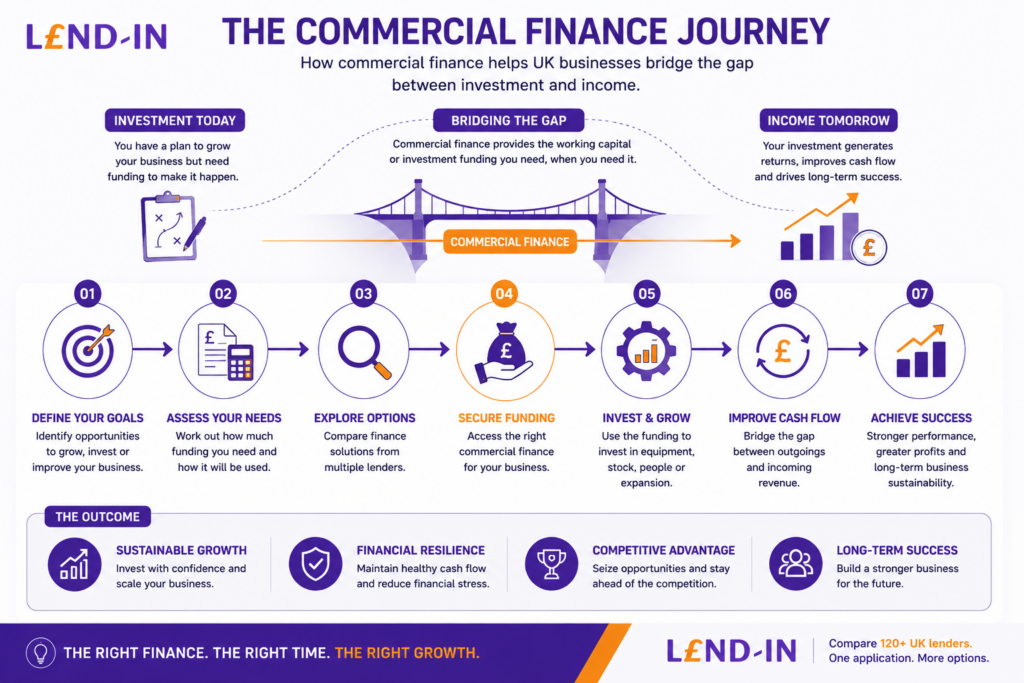
Understanding the Commercial Finance Journey
The commercial finance journey begins when a business identifies a funding requirement or growth opportunity. This may involve purchasing equipment, expanding into new premises, recruiting additional employees or securing a larger customer contract.
Once the funding requirement has been identified, the business compares suitable commercial finance solutions before selecting a facility that aligns with its objectives and repayment preferences. After approval, funding is released and used to support the agreed business purpose.
As the investment generates additional revenue or operational benefits, the business repays the finance according to the agreed schedule while continuing to benefit from improved productivity, stronger cash flow or increased profitability.
By following this structured approach, commercial finance becomes a strategic business tool that supports sustainable growth rather than simply providing access to capital.
Table 4. Typical Commercial Finance Journey
| Stage | Business Activity | How Commercial Finance Supports the Business |
|---|---|---|
| Growth Opportunity Identified | Business secures a new opportunity or investment | Funding requirement identified |
| Funding Solution Selected | Business compares finance options | Appropriate commercial finance facility chosen |
| Investment Made | Equipment, stock, property or staffing purchased | Business continues operating without disrupting cash flow |
| Revenue Generated | Customer payments or operational benefits received | Business strengthens financial position |
| Repayment | Finance repaid under agreed terms | Business continues growing with improved resilience |
Table 4. Illustrative commercial finance journey showing how funding supports UK businesses from identifying an opportunity through to investment, growth and repayment.
💡 Did You Know?
Many businesses secure commercial finance before funding becomes urgent. Planning ahead allows companies to compare lenders, review repayment options and access funding quickly when new opportunities arise.
⭐ Expert Tip
Commercial finance is often most effective when arranged proactively rather than reactively. Comparing funding solutions before cash flow becomes constrained gives businesses greater flexibility and more time to choose a facility that aligns with their long-term objectives.
✅ Key Takeaway
Commercial finance is designed to help businesses invest with confidence. By providing access to funding before revenue is received, businesses can seize opportunities, strengthen cash flow and continue growing without placing unnecessary pressure on existing resources.
Why This Matters for UK Businesses
Many businesses associate commercial finance with solving financial problems. In reality, it is equally valuable as a growth strategy. Whether funding is used to purchase equipment, expand operations or fulfil larger customer contracts, the right commercial finance solution can provide the flexibility needed to invest in the future while maintaining day-to-day financial stability.
How Lenders Assess Commercial Finance Applications
Applying for commercial finance involves more than simply requesting funding. Before approving an application, lenders carefully assess a business’s financial position, affordability and the purpose of the funding. Understanding how this process works can help businesses prepare stronger applications, avoid unnecessary delays and improve their chances of securing a suitable finance solution.
Although every lender has its own underwriting process, most assess a similar range of financial and operational factors. Rather than relying on one piece of information, lenders review the overall strength of the application to determine whether the proposed funding is appropriate for the business’s circumstances.
One of the first areas lenders consider is the financial performance of the business. This typically includes turnover, profitability, cash flow and existing financial commitments. The objective is to establish whether the business can comfortably meet future repayments while continuing to operate effectively.
Lenders also assess the purpose of the funding. Applications that clearly explain how the commercial finance will support business growth, improve cash flow or fund a specific investment often provide greater confidence than applications with no clearly defined objective.
Trading history is another important consideration. Established businesses with a consistent track record may have access to a wider range of funding options. However, many lenders also support newer businesses where there is evidence of strong financial management, experienced directors or realistic growth plans.
In addition, lenders commonly review director and business credit history, existing borrowing, industry sector and, where relevant, any security available to support the application. These factors help lenders assess risk while identifying funding solutions that are suitable for the business’s individual circumstances.
Ultimately, successful commercial finance applications are based on the overall quality of the information provided rather than a single financial metric. Businesses that present accurate documentation, demonstrate affordability and clearly explain their funding requirements are often better positioned to secure competitive finance.
Table 5. Key Factors Lenders Consider When Assessing Commercial Finance Applications
| Assessment Area | Why It Matters |
|---|---|
| Business turnover | Demonstrates trading activity and repayment capacity. |
| Profitability | Indicates whether the business can comfortably support repayments. |
| Cash flow | Helps assess liquidity and financial resilience. |
| Trading history | Provides evidence of stability and business performance. |
| Existing borrowing | Influences affordability and overall financial commitments. |
| Director and business credit profile | Helps lenders evaluate financial reliability. |
| Purpose of the funding | Demonstrates how the finance will support the business. |
| Industry sector | Some lenders have specialist expertise or sector preferences. |
| Available security (where applicable) | May support larger borrowing amounts or longer repayment terms. |
Table 5. Key factors commonly considered by UK lenders when assessing commercial finance applications and determining eligibility for business funding.
Documents You May Need
Preparing your documents before applying can make the process smoother and reduce avoidable delays. Although requirements vary between lenders, businesses are commonly asked to provide:
- The last 6–12 months of business bank statements.
- The most recent filed annual accounts.
- Current management accounts, where available.
- Details of existing borrowing commitments.
- Confirmation of how the funding will be used.
- Director identification and proof of address.
- Additional information relevant to the finance being requested.
Providing complete and accurate information from the outset allows lenders to assess applications more efficiently and helps avoid unnecessary requests for further documentation.
💡 Did You Know?
A business that does not meet one lender’s criteria may still qualify with another. Every lender has different affordability models, sector preferences and risk appetite, which is why comparing multiple lenders can significantly increase the likelihood of finding a suitable commercial finance solution.
⭐ Expert Tip
Before applying for commercial finance, prepare a clear explanation of why the funding is needed and how it will benefit your business. Applications with a well-defined purpose are often easier for lenders to assess and can help demonstrate that the finance supports a genuine commercial objective.
✅ Key Takeaway
Lenders assess commercial finance applications by reviewing the overall strength of the business rather than relying on a single figure. Presenting accurate financial information, demonstrating affordability and clearly explaining the purpose of the funding can improve both the application process and the likelihood of securing suitable finance.
Why This Matters for UK Businesses
Understanding how lenders assess commercial finance applications enables businesses to prepare more effectively before applying. Rather than submitting multiple applications without a clear strategy, businesses that understand lender expectations can compare funding providers more confidently, improve approval prospects and identify finance solutions that support sustainable long-term growth.
Common Reasons Commercial Finance Applications Are Declined
A declined commercial finance application does not necessarily mean a business is unable to secure funding. Every lender has different underwriting criteria, sector preferences and risk appetite, meaning an application that is unsuitable for one lender may still be approved by another. Understanding why applications are declined can help businesses strengthen future applications and improve their chances of securing the right funding solution.
Before approving finance, lenders assess whether the proposed borrowing is affordable, appropriate and aligned with the business’s financial position. Consequently, applications that are well prepared, supported by accurate financial information and clearly explain the purpose of the funding are often viewed more favourably.
Below are some of the most common reasons why commercial finance applications may be declined.
Insufficient Affordability
Affordability is one of the most important factors in any commercial finance application. Lenders need confidence that the business can comfortably meet future repayments while continuing to manage day-to-day operating costs.
If projected repayments place excessive pressure on cash flow, a lender may decide that the funding is unsuitable. Demonstrating stable trading performance and realistic repayment capacity can help strengthen an application.
Limited Trading History
Many lenders prefer businesses with an established trading history because it provides evidence of financial stability and consistent performance. However, this does not prevent newer businesses from obtaining finance.
Specialist lenders may support start-ups or younger businesses where there is a strong business plan, experienced directors or encouraging financial performance.
Weak or Inconsistent Cash Flow
A business can be profitable but still experience periods of uneven cash flow. Regular overdraft usage, late customer payments or inconsistent income may lead lenders to request further information before making a decision.
Providing accurate management accounts and explaining temporary fluctuations can help place the financial position into context.
High Existing Borrowing
Existing borrowing commitments form part of a lender’s affordability assessment. While having current finance does not automatically prevent approval, lenders will consider whether additional borrowing remains sustainable alongside existing repayments.
Providing a clear overview of current facilities enables lenders to assess the overall financial position more accurately.
Credit History Concerns
Both business and director credit history may be reviewed as part of the application. Previous missed payments, defaults or other adverse credit events can influence lending decisions, although many specialist lenders assess applications on an individual basis rather than relying on credit history alone.
Unclear Purpose of the Funding
Lenders generally prefer applications that clearly explain how the commercial finance will support the business.
Whether funding is required to improve cash flow, purchase equipment, expand operations or invest in new opportunities, providing a clear commercial objective demonstrates planning and helps lenders understand the purpose of the application.
Table 6. Common Reasons Commercial Finance Applications Are Declined
| Reason | How Businesses Can Improve Their Application |
|---|---|
| Affordability concerns | Demonstrate sustainable cash flow and realistic repayment capacity. |
| Limited trading history | Provide forecasts, management accounts and a clear business plan where appropriate. |
| Inconsistent cash flow | Explain temporary fluctuations and supply supporting financial information. |
| Existing borrowing commitments | Clearly disclose current facilities and repayment performance. |
| Credit history concerns | Maintain good payment habits and provide additional context where necessary. |
| Unclear funding purpose | Explain how the finance will support business objectives and future growth. |
Table 6. Common reasons commercial finance applications may be declined and practical steps businesses can take to strengthen future funding applications.
Practical Steps Before You Apply
Businesses can improve the quality of their application by preparing before approaching lenders. Consider the following:
- Review recent business bank statements for consistency.
- Ensure accounts are complete and up to date.
- Clearly define the purpose of the funding.
- Calculate affordable repayment levels.
- Compare multiple lenders rather than relying on a single provider.
- Seek guidance from a commercial finance specialist if you are unsure which funding solution is most appropriate.
These simple steps can improve both the application process and the likelihood of securing suitable finance.
💡 Did You Know?
A declined application from one lender does not prevent your business from securing commercial finance elsewhere. Because lenders assess risk differently, comparing multiple providers can significantly increase your chances of identifying a funding solution that matches your business’s circumstances.
⭐ Expert Tip
Before submitting an application, ask yourself one simple question: “Can I clearly explain how this funding will help my business grow or improve?” A well-defined purpose often gives lenders greater confidence and can make the application easier to assess.
✅ Key Takeaway
Most commercial finance applications are strengthened through preparation rather than chance. By understanding what lenders assess, presenting accurate financial information and choosing the right lender, businesses can improve approval prospects and access funding that supports sustainable long-term growth.
Why This Matters for UK Businesses
Every commercial finance application tells a story about a business. The stronger and clearer that story is, the easier it becomes for lenders to understand the opportunity and assess the level of risk involved. Taking time to prepare before applying can improve approval prospects, reduce delays and help businesses identify funding solutions that genuinely support their long-term objectives.
Commercial Finance Application Checklist
Choosing the right commercial finance solution starts with careful preparation. Before approaching a lender, reviewing the key areas below can help strengthen your application, reduce unnecessary delays and improve your chances of securing funding that supports your business objectives.
Use the checklist below as a practical guide before applying for commercial finance.
✅ Commercial Finance Checklist
Prepare Your Financial Information
✔ Review your most recent filed annual accounts.
✔ Ensure your management accounts are accurate and up to date.
✔ Gather the last 6–12 months of business bank statements.
✔ Review your current cash flow position.
Define Your Funding Requirement
✔ Clearly identify how much funding you require.
✔ Explain exactly how the finance will be used.
✔ Ensure the funding supports a genuine commercial objective.
✔ Consider whether another commercial finance product may be more suitable.
Review Affordability
✔ Calculate realistic monthly repayments.
✔ Consider how repayments fit within existing cash flow.
✔ Review any existing borrowing commitments.
✔ Avoid borrowing more than the business genuinely requires.
Compare Commercial Finance Providers
✔ Compare multiple lenders rather than approaching only one provider.
✔ Review repayment flexibility as well as interest rates.
✔ Check for arrangement fees and early repayment charges.
✔ Compare funding timescales where speed is important.
Prepare Supporting Documents
✔ Director identification.
✔ Proof of business address.
✔ Existing finance information.
✔ Details of any assets offered as security (where applicable).
Seek Expert Guidance
✔ Discuss the funding requirement with a commercial finance specialist.
✔ Ensure the chosen funding solution aligns with both short-term requirements and long-term business goals.
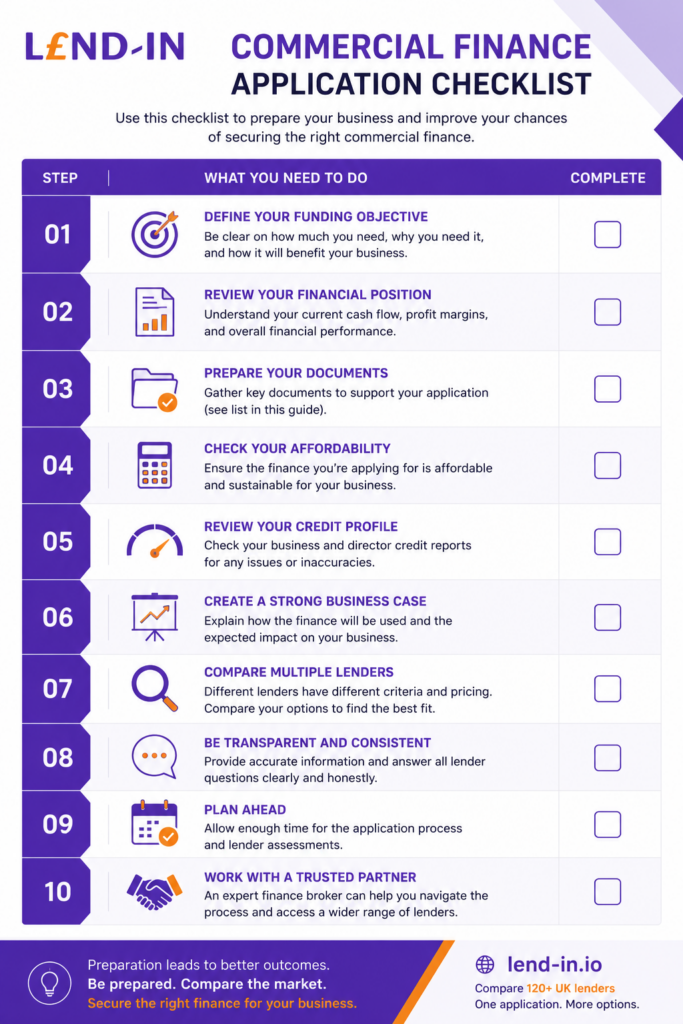
Figure 2. Commercial Finance Application Checklist
This checklist summarises the key steps businesses should complete before applying for commercial finance. Preparing accurate financial information, defining a clear funding objective and comparing multiple lenders can help improve the application process while increasing the likelihood of securing suitable funding.
💡 Did You Know?
Many commercial finance applications are delayed because supporting information is incomplete rather than because the business is unsuitable for funding. Preparing documents in advance can make the application process more efficient and provide lenders with a clearer understanding of your business.
⭐ Expert Tip
Treat your commercial finance application like an investment proposal rather than a finance request. The clearer you explain your objectives, financial position and repayment strategy, the easier it is for lenders to understand how the funding will support your business.
✅ Key Takeaway
Preparation is one of the most effective ways to improve a commercial finance application. Businesses that organise their financial information, define a clear funding purpose and compare multiple lenders are often better positioned to secure funding that supports sustainable growth.
Why This Checklist Matters
A well-prepared application benefits both the business and the lender. By gathering the right information before applying, businesses can reduce delays, improve communication and compare funding options with greater confidence. Whether the objective is to improve cash flow, purchase equipment or support expansion, following a structured checklist helps ensure the application reflects the business’s financial position and long-term goals.
How to Choose the Right Commercial Finance Solution
Selecting the right commercial finance solution is not simply about borrowing money. The most appropriate funding option depends on your business objectives, cash flow requirements and long-term plans. By matching the type of finance to the reason for borrowing, businesses can improve financial flexibility while avoiding unnecessary borrowing costs.
The decision framework below provides a simple way to identify which type of commercial finance may be most suitable based on your funding requirement.
Figure 3. Choosing the Right Commercial Finance Solution
This decision framework illustrates how UK businesses can identify the most appropriate commercial finance solution based on their funding objective. By understanding the purpose of the funding before applying, businesses can compare suitable products more effectively and improve their overall funding strategy.
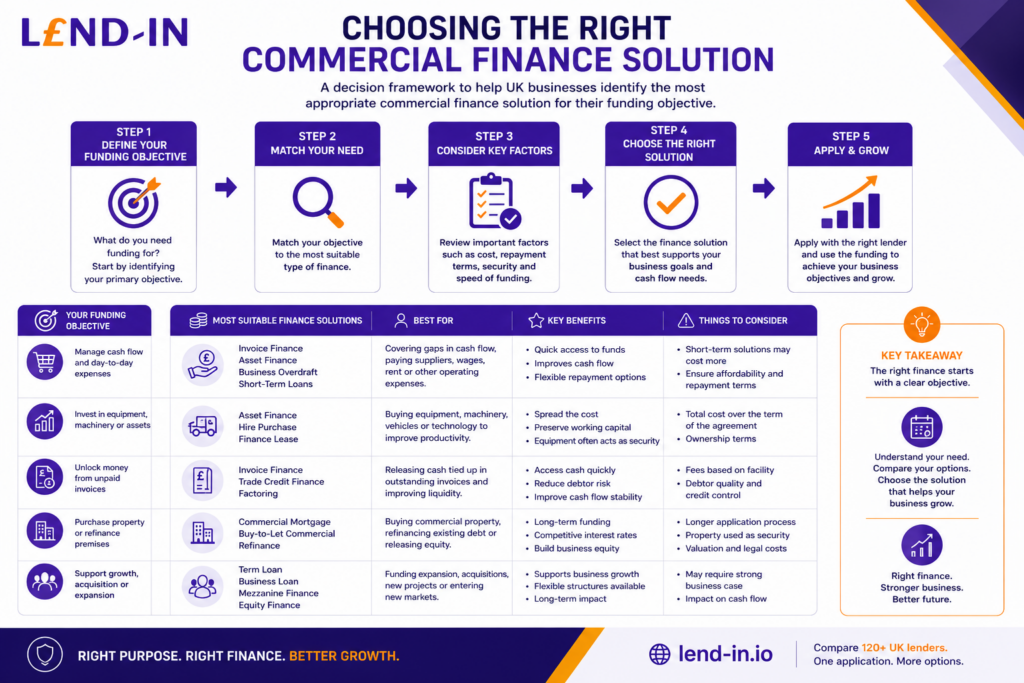
Table 7. Choosing the Right Commercial Finance Solution
| If Your Business Needs To… | Commercial Finance Solution to Consider |
|---|---|
| Improve day-to-day cash flow | Working Capital Finance |
| Purchase equipment or machinery | Asset Finance |
| Unlock cash tied up in unpaid invoices | Invoice Finance |
| Purchase or refinance business premises | Commercial Mortgage |
| Fund business expansion | Business Loan |
| Access flexible ongoing funding | Revolving Credit Facility |
| Invest in technology or specialist equipment | Equipment Finance |
| Refinance existing borrowing | Commercial Finance Refinancing |
Table 7. Examples of commercial finance solutions based on common business funding requirements.
Making an Informed Funding Decision
Every business has different funding requirements, which is why there is no universal commercial finance solution. Before applying, consider what you want the finance to achieve, how quickly funding is required and how repayments will fit within your existing cash flow.
Comparing products based on flexibility, affordability and suitability is often more valuable than focusing solely on the lowest headline interest rate. A funding solution that aligns with your business objectives is more likely to support sustainable growth and long-term financial stability.
💡 Did You Know?
Businesses that clearly define why they need funding often find it easier to identify the most appropriate commercial finance solution. Matching the funding product to the business objective can simplify the application process and improve decision-making.
⭐ Expert Tip
Before comparing lenders, write down your funding objective in a single sentence. Whether the goal is to improve cash flow, purchase equipment or support expansion, having a clear objective makes it easier to compare finance products and choose the right solution for your business.
✅ Key Takeaway
Choosing the right commercial finance solution begins with understanding your business objective. By selecting funding that matches your operational needs and future growth plans, businesses can improve cash flow, strengthen financial resilience and invest with greater confidence.
Continue Your Learning
Continue exploring commercial finance with our related guides:
- Business Finance Explained: How UK SMEs Can Choose the Right Funding Solution
- Business Loans Explained: The Complete Guide for UK Businesses
- Working Capital Explained: The Complete Guide for UK Businesses
- Asset Finance Explained (Coming Soon)
- Invoice Finance Explained (Coming Soon)
- Commercial Mortgages Explained (Coming Soon)
Commercial Finance Readiness Checklist
Before applying for commercial finance, it is worth taking a few minutes to assess whether your business is fully prepared. A well-prepared application not only reduces unnecessary delays but can also improve your chances of securing funding that aligns with your business objectives.
Use the checklist below as a practical guide before comparing lenders or submitting an application.
Financial Preparation
✔ Ensure your latest filed annual accounts are available.
✔ Prepare recent management accounts where applicable.
✔ Gather the last 6–12 months of business bank statements.
✔ Review your current cash flow and liquidity position.
✔ Confirm any existing borrowing commitments.
Funding Requirements
✔ Decide how much funding your business genuinely requires.
✔ Clearly define how the finance will be used.
✔ Consider whether the funding supports a short-term requirement or a long-term investment.
✔ Choose the type of commercial finance that best matches your business objective.
Affordability
✔ Estimate realistic monthly repayments.
✔ Consider how repayments fit within projected cash flow.
✔ Ensure additional borrowing remains affordable alongside existing commitments.
Compare the Market
✔ Compare funding from multiple lenders rather than approaching a single provider.
✔ Review repayment flexibility alongside interest rates.
✔ Check for arrangement fees or early repayment charges.
✔ Compare funding timescales where speed is important.
Supporting Documentation
✔ Business bank statements.
✔ Filed annual accounts.
✔ Management accounts (where available).
✔ Existing finance information.
✔ Director identification.
✔ Information explaining the purpose of the funding.
Before You Apply
Ask yourself these five questions:
- Does this funding support my business objectives?
- Have I compared multiple lenders?
- Is the repayment structure affordable?
- Have I prepared all supporting documents?
- Have I selected the most suitable commercial finance product?
If you can confidently answer “Yes” to each question, your business is likely to be in a stronger position before submitting an application.
Table 8. Commercial Finance Preparation Summary
| Preparation Step | Why It Matters |
|---|---|
| Organise financial information | Helps lenders assess the application efficiently. |
| Define the funding objective | Demonstrates a clear commercial purpose. |
| Review affordability | Ensures repayments remain manageable. |
| Compare multiple lenders | Increases access to suitable funding solutions. |
| Prepare supporting documents | Reduces delays during the underwriting process. |
Table 8. Key preparation steps businesses should complete before applying for commercial finance.
💡 Did You Know?
Businesses that prepare their financial information before applying often experience a smoother application process. Having accurate records and a clearly defined funding objective allows lenders to assess applications more efficiently and helps businesses compare funding options with greater confidence.
⭐ Expert Tip
Treat commercial finance as part of your wider business strategy rather than a short-term solution. The most successful funding decisions are those that support sustainable growth, strengthen cash flow and align with your long-term commercial objectives.
✅ Key Takeaway
Strong commercial finance applications begin long before the application form is completed. Careful preparation, accurate financial information and a clear understanding of your funding objectives can improve both the application process and the quality of the funding options available.
Commercial Finance vs Business Loans: What’s the Difference?
Although the terms commercial finance and business loans are often used interchangeably, they do not mean the same thing. Understanding the distinction can help businesses compare funding options more effectively and choose a solution that aligns with their financial objectives.
A business loan is one specific type of commercial finance. It provides a fixed amount of funding that is repaid over an agreed period, typically through regular monthly repayments. Business loans are commonly used to fund expansion, purchase equipment, recruit employees or invest in long-term projects.
Commercial finance, by comparison, is the broader category that includes business loans alongside a wide range of other funding solutions. These include working capital finance, asset finance, invoice finance, commercial mortgages, equipment finance and revolving credit facilities. Each product is designed to address different commercial requirements, giving businesses greater flexibility when choosing how to fund growth.
The most appropriate funding solution depends on the purpose of the finance. A business purchasing new machinery may benefit from asset finance, while another business looking to improve day-to-day liquidity may find working capital finance more suitable. Businesses purchasing commercial premises often choose a commercial mortgage, whereas those seeking a fixed borrowing amount for expansion may prefer a traditional business loan.
Understanding these differences enables businesses to compare funding solutions based on their objectives rather than assuming a business loan is the only option available.
Figure 4. Commercial Finance vs Business Loans
This illustration compares commercial finance with business loans, showing that business loans form one part of the wider commercial finance landscape. Understanding the distinction helps businesses choose funding solutions that best support their operational requirements and long-term growth plans.
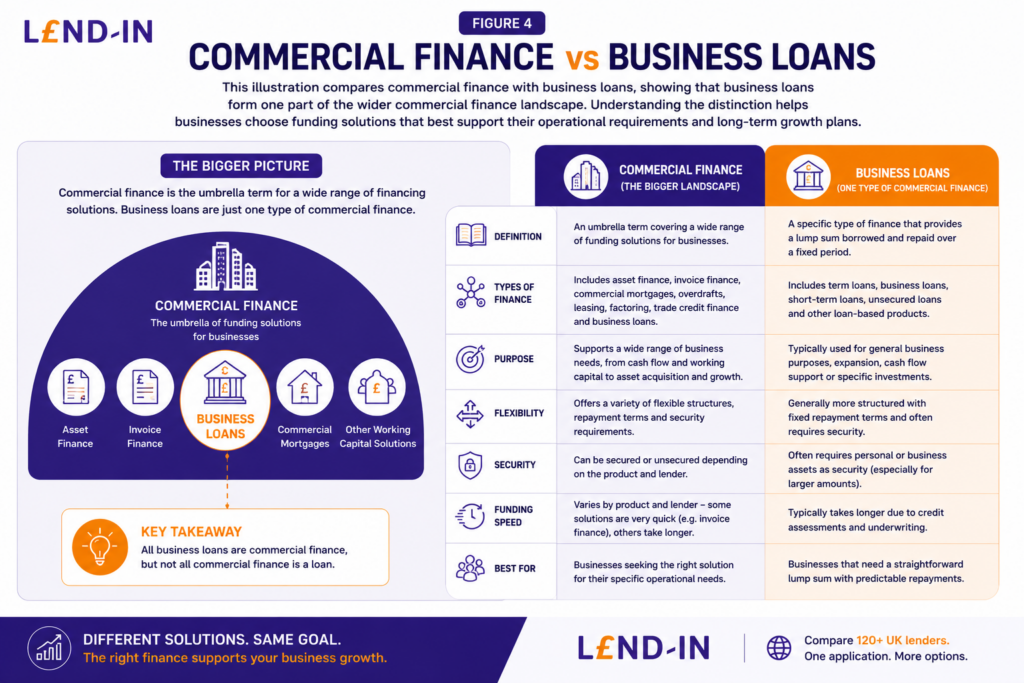
Table 9. Commercial Finance vs Business Loans
| Feature | Commercial Finance | Business Loans |
|---|---|---|
| Definition | A broad category of business funding solutions | One specific type of commercial finance |
| Funding Options | Includes multiple finance products | Single funding product |
| Flexibility | Wide range of repayment structures and products | Fixed borrowing amount with agreed repayments |
| Typical Uses | Cash flow, equipment, property, invoices and growth | Expansion, investment and long-term projects |
| Suitable For | Businesses with varied funding requirements | Businesses requiring a defined borrowing amount |
Table 9. Comparison between commercial finance and business loans, highlighting the key differences businesses should understand before selecting a funding solution.
Which Option Is Right for Your Business?
Choosing between a business loan and another commercial finance solution begins with understanding why the funding is needed. Rather than focusing solely on the amount you wish to borrow, consider the commercial objective the finance will support.
If your business requires a fixed amount of funding for expansion, a business loan may be appropriate. However, if the priority is improving cash flow, purchasing specialist equipment or releasing cash tied up in unpaid invoices, another form of commercial finance may offer greater flexibility and better align with your operational needs.
Comparing different funding products before applying enables businesses to select finance that supports sustainable growth while maintaining healthy cash flow and financial resilience.
💡 Did You Know?
Many businesses use more than one commercial finance product at the same time. For example, a company may use a business loan to fund expansion while using asset finance to purchase equipment and working capital finance to support day-to-day operations.
⭐ Expert Tip
Rather than asking, “Which lender offers the cheapest business loan?”, ask, “Which type of commercial finance best supports my business objective?” Choosing the right product first often leads to a more effective long-term funding strategy.
✅ Key Takeaway
Every business loan is a form of commercial finance, but not every commercial finance solution is a business loan. Understanding the wider range of funding options enables businesses to make informed decisions, improve financial flexibility and choose finance that supports long-term success.
Why This Matters for UK Businesses
Businesses that understand the difference between commercial finance and business loans are better equipped to compare funding solutions that genuinely meet their needs. Rather than limiting their options to a single product, they can explore a broader range of facilities designed to improve cash flow, support investment and create opportunities for sustainable growth.
How to Improve Your Chances of Securing Commercial Finance
Applying for commercial finance is about more than completing an application form. Lenders assess the overall strength of a business, including its financial performance, affordability and future plans, before deciding whether to approve funding. Taking time to prepare can improve the quality of your application, reduce avoidable delays and increase the likelihood of securing finance that supports your business objectives.
Although every lender applies different underwriting criteria, businesses that provide accurate financial information, clearly explain their funding requirements and demonstrate affordability are often in a stronger position when comparing funding options.
The following best practices can help improve your chances of securing commercial finance.
Maintain Accurate Financial Records
Lenders rely on financial information to understand how a business is performing. Providing up-to-date annual accounts, management accounts and recent business bank statements demonstrates transparency while enabling lenders to assess affordability more efficiently.
Businesses with organised financial records often experience a smoother application process because lenders have access to the information needed to make an informed decision.
Clearly Define Your Funding Objective
One of the most effective ways to strengthen a commercial finance application is to explain exactly why the funding is required.
Whether the objective is to improve cash flow, purchase equipment, expand operations or refinance existing borrowing, a clearly defined purpose helps lenders understand how the funding will benefit the business.
Demonstrate Affordability
Commercial finance should support growth rather than create unnecessary financial pressure. Before applying, businesses should consider how repayments will fit within projected income and existing financial commitments.
Choosing a funding solution with an appropriate repayment structure can improve financial flexibility while helping the business manage future cash flow with confidence.
Compare Multiple Lenders
Every lender has different eligibility criteria, sector expertise and lending preferences. Consequently, comparing multiple providers often provides access to a broader range of commercial finance solutions than approaching a single lender.
Reviewing different options also helps businesses compare repayment structures, flexibility and overall suitability rather than focusing solely on headline interest rates.
Prepare Supporting Documentation
Submitting complete documentation at the start of the application process can help reduce delays and improve communication with lenders.
Businesses are commonly asked to provide:
- Recent business bank statements.
- Filed annual accounts.
- Current management accounts where available.
- Details of existing borrowing.
- Director identification.
- Information explaining how the funding will be used.
Preparing these documents in advance allows lenders to review applications more efficiently and helps businesses progress through the funding process with greater confidence.
Table 10. Practical Ways to Improve Your Commercial Finance Application
| Action | How It Strengthens Your Application |
|---|---|
| Keep financial records up to date | Helps lenders assess affordability efficiently. |
| Clearly explain the funding purpose | Demonstrates a genuine commercial objective. |
| Review affordability before applying | Shows repayments are sustainable. |
| Compare multiple lenders | Increases access to suitable funding options. |
| Prepare supporting documents | Reduces delays during underwriting. |
| Seek professional guidance | Helps identify the most appropriate commercial finance solution. |
Table 10. Practical steps businesses can take to improve their commercial finance application and strengthen their chances of securing suitable funding.
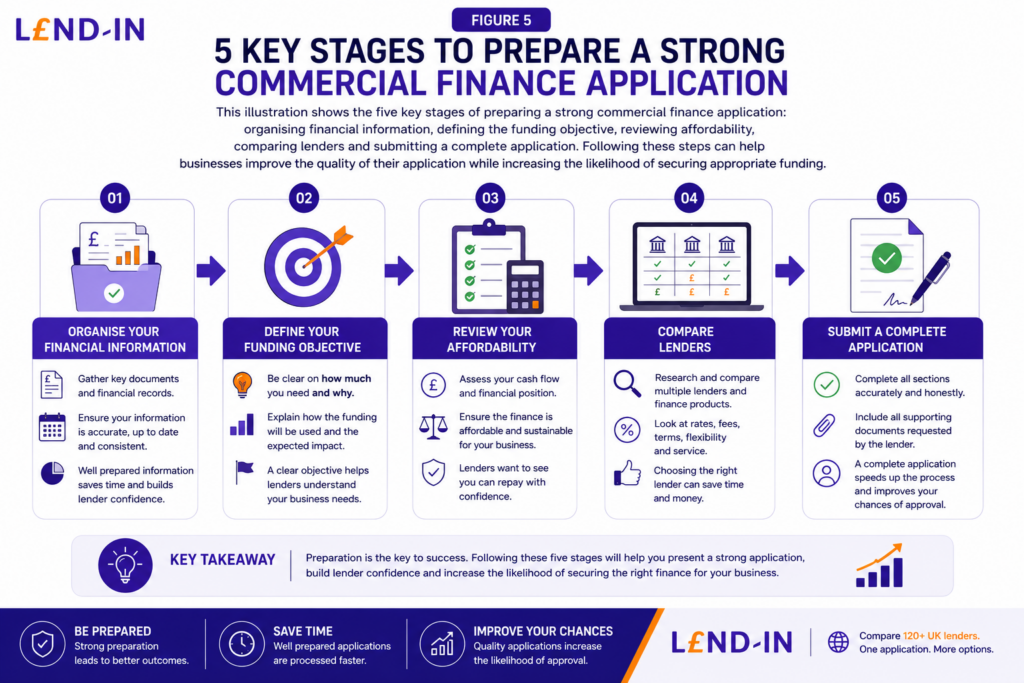
Figure 5. Building a Strong Commercial Finance Application
This illustration shows the five key stages of preparing a strong commercial finance application: organising financial information, defining the funding objective, reviewing affordability, comparing lenders and submitting a complete application. Following these steps can help businesses improve the quality of their application while increasing the likelihood of securing appropriate funding.
💡 Did You Know?
Many businesses improve their chances of securing commercial finance simply by applying through a lender whose criteria align with their circumstances. Because lenders assess applications differently, comparing multiple providers can often reveal funding opportunities that would not be available through a single application.
⭐ Expert Tip
The strongest commercial finance applications are prepared before funding becomes urgent. Planning ahead gives businesses more time to compare products, review repayment options and present a well-supported application that reflects their long-term objectives.
✅ Key Takeaway
Successful commercial finance applications are built on preparation, transparency and choosing the right funding solution. By understanding lender expectations and comparing multiple providers, businesses can improve approval prospects while securing finance that supports sustainable growth.
Why This Matters for UK Businesses
Commercial finance should be viewed as a strategic business tool rather than simply a source of funding. Businesses that prepare thoroughly, compare lenders carefully and choose finance that aligns with their objectives are often better positioned to strengthen cash flow, invest confidently and achieve sustainable long-term growth.
How Lend-In Helps Businesses Compare Commercial Finance
Finding the right commercial finance solution can be challenging. With a wide range of lenders, funding products and eligibility criteria available across the UK market, identifying the most suitable option often requires more than comparing headline interest rates alone.
Every business has different objectives, financial circumstances and growth plans. Likewise, every lender has its own approach to affordability, sector preferences and underwriting. As a result, a funding solution that is appropriate for one business may not be the best fit for another.
At Lend-In, we help businesses compare commercial finance solutions from a panel of more than 120 UK lendersthrough a single application. Rather than approaching lenders individually, businesses can explore a broad range of funding options while receiving guidance throughout the process from experienced commercial finance specialists.
Our approach focuses on understanding your business first. By taking the time to assess your funding objectives, cash flow requirements and future growth plans, we can help identify finance solutions that align with your circumstances rather than recommending a one-size-fits-all product.
Whether your business is looking to improve cash flow, purchase equipment, invest in commercial property, refinance existing borrowing or support expansion, comparing multiple lenders can help you make a more informed funding decision.
What We Can Help With
At Lend-In, we help businesses compare a wide range of commercial finance solutions, including:
- Business Loans
- Working Capital Finance
- Asset Finance
- Invoice Finance
- Commercial Mortgages
- Equipment Finance
- Revolving Credit Facilities
- Business Refinancing
- Growth Finance
- Commercial Property Finance
By comparing multiple funding options, businesses can identify facilities that better support their operational requirements, repayment preferences and long-term objectives.
Why Comparing Commercial Finance Matters
Choosing commercial finance is about much more than selecting the lowest interest rate. Businesses should also consider repayment flexibility, funding speed, lender expertise, product suitability and how the facility will support future growth.
Comparing multiple lenders provides a broader view of the market and can help businesses identify funding solutions that may not be available through a single provider. It also enables businesses to evaluate the overall value of a finance product rather than focusing on pricing alone.
A structured comparison process can help businesses:
- Explore funding from a broad panel of UK lenders.
- Identify finance products suited to their business objectives.
- Compare repayment structures and flexibility.
- Understand the total cost of borrowing.
- Save time by avoiding multiple individual applications.
- Make more informed commercial finance decisions.
Figure 6. How Lend-In Helps Businesses Compare Commercial Finance
This illustration demonstrates the commercial finance comparison journey, showing how businesses move from identifying a funding requirement to comparing lenders, reviewing suitable finance solutions and selecting funding that aligns with their long-term objectives.
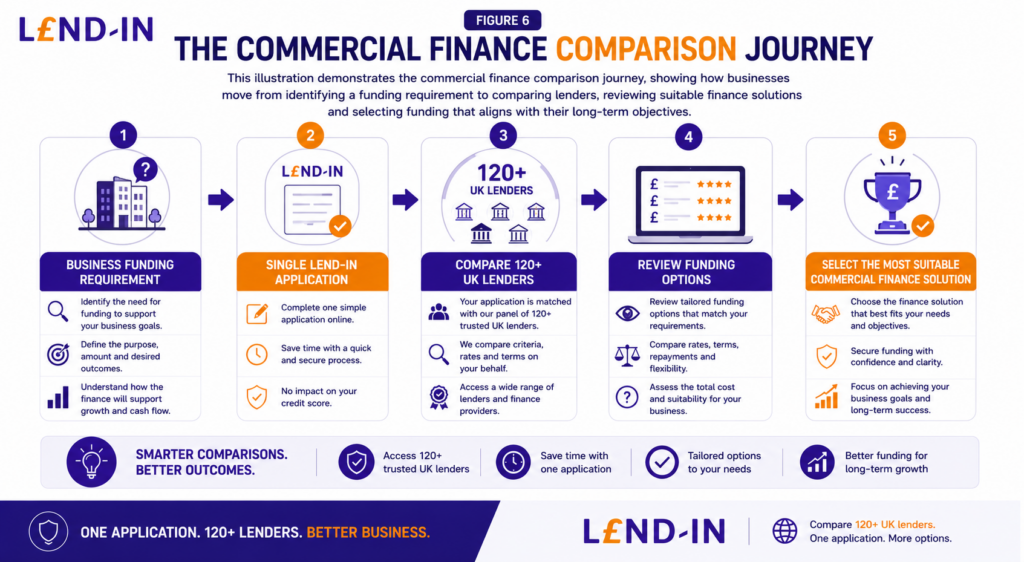
Table 11. Benefits of Comparing Commercial Finance Through Lend-In
| Benefit | How It Supports Your Business |
|---|---|
| One application | Reduces the need to approach multiple lenders individually. |
| Access to 120+ UK lenders | Increases the range of commercial finance options available. |
| Tailored funding comparisons | Helps identify finance aligned with business objectives. |
| Specialist guidance | Supports informed funding decisions throughout the process. |
| Broad product range | Enables businesses to compare different commercial finance solutions in one place. |
| Time-saving process | Simplifies the journey from enquiry to funding comparison. |
Table 11. Benefits of comparing commercial finance solutions through Lend-In.
💡 Did You Know?
Two businesses with similar financial performance can receive different funding outcomes because lenders have different lending criteria, sector specialisms and affordability models. Comparing multiple lenders can help businesses identify funding solutions that better match their individual circumstances.
⭐ Expert Tip
When comparing commercial finance, focus on the overall suitability of the funding rather than just the headline interest rate. Repayment flexibility, lender expertise, product features and long-term affordability can all influence the value of a finance solution.
✅ Key Takeaway
Comparing commercial finance gives businesses greater visibility of the funding options available across the market. By understanding your objectives and reviewing multiple lenders, you can choose a solution that supports cash flow, investment and sustainable business growth with greater confidence.
Why This Matters for UK Businesses
The UK commercial finance market offers more choice than ever before, but greater choice also means greater complexity. Businesses that compare funding options carefully are often better positioned to identify finance that supports both immediate operational requirements and long-term growth. Taking a structured approach to comparing lenders and funding products can improve decision-making while reducing the risk of selecting a facility that is not aligned with the business’s objectives.
Frequently Asked Questions
Commercial finance is a broad term used to describe funding solutions that help businesses improve cash flow, purchase assets, invest in growth and manage day-to-day operations. Commercial finance includes products such as business loans, working capital finance, asset finance, invoice finance and commercial mortgages.
Commercial finance provides businesses with access to funding that can be used for specific commercial purposes. Once approved, the business receives funding and repays the finance according to the agreed terms and repayment schedule. The type of finance available depends on the purpose of the funding and the lender’s eligibility criteria.
A business loan is one type of commercial finance. Commercial finance is the wider category that includes business loans, asset finance, invoice finance, working capital finance, commercial mortgages and other funding solutions designed for different business requirements.
Commercial finance is available to many UK businesses, including:
– Limited companies
– Sole traders
– Partnerships
– Limited Liability Partnerships (LLPs)
Eligibility varies between lenders and is typically based on factors such as trading history, affordability, financial performance and the purpose of the funding.
Businesses commonly use commercial finance to:
– Improve cash flow
– Purchase equipment and machinery
– Buy stock or inventory
– Recruit employees
– Expand into new markets
– Purchase commercial property
– Refinance existing borrowing
– Fund business growth
There is no standard borrowing limit. The amount available depends on factors including the business’s financial position, affordability, trading history, the purpose of the funding and the lender’s individual criteria.
No. Many successful businesses use commercial finance strategically to invest in expansion, improve cash flow, purchase assets and take advantage of growth opportunities. Commercial finance is commonly used to support development rather than solve financial problems.
Although requirements vary between lenders, businesses are commonly asked to provide:
– Recent business bank statements
– Filed annual accounts
– Management accounts where available
– Details of existing borrowing
– Director identification
– Information explaining how the funding will be used
Preparing these documents in advance can help streamline the application process.
Lenders typically review a range of factors, including:
– Turnover
– Profitability
– Cash flow
– Trading history
– Existing borrowing
– Business and director credit profiles
– The purpose of the funding
Every lender applies its own underwriting criteria, which is why outcomes can vary across the market.
Yes. Some lenders specialise in funding start-ups and newer businesses. Approval often depends on factors such as the directors’ experience, business plans, affordability and projected financial performance.
Not always. Some commercial finance products require security, while others are available without specific assets being offered. The requirement depends on the funding product, borrowing amount and the lender’s criteria.
Timescales vary depending on the type of finance and the lender. Simpler funding solutions may be arranged relatively quickly and some times within 4 hours of applying, while larger or more complex facilities can take longer due to additional underwriting and legal processes.
Many commercial finance products allow early repayment, although some agreements may include early settlement charges. Businesses should review the terms and conditions carefully before accepting a funding offer.
Some lenders perform credit searches during the application process. The type of search and its impact depend on the lender’s and their procedures. If you are comparing funding options, it is sensible to understand how enquiries will be recorded before submitting a full application.
Businesses can strengthen their application by:
– Maintaining accurate financial records.
– Demonstrating affordability.
– Clearly explaining the purpose of the funding.
– Preparing supporting documentation.
– Comparing multiple lenders whose criteria align with their circumstances.
Preparation and transparency can help improve the application process.
Yes. Every lender has different lending criteria, pricing structures and sector preferences. Comparing multiple providers can help businesses identify funding solutions that better match their objectives, financial position and repayment preferences.
Commercial finance is used across a wide range of sectors, including construction, manufacturing, retail, healthcare, hospitality, logistics, professional services, agriculture and technology. Different funding solutions are available to support the varying requirements of each industry.
Yes. Many businesses use commercial finance to strengthen cash flow by funding short-term operational requirements, purchasing inventory, covering payroll or releasing cash tied up in unpaid invoices. The most suitable solution depends on the business’s specific circumstances.
When comparing commercial finance, businesses should consider more than the headline interest rate. It is also important to review repayment flexibility, total borrowing costs, product suitability, funding speed, eligibility criteria and how well the finance supports the business’s long-term objectives.
Lend-In helps businesses compare commercial finance solutions from a panel of more than 120 UK lenders through a single application. By comparing a broad range of funding options, businesses can identify finance that aligns with their objectives while receiving guidance throughout the funding journey.
⭐ Final FAQ Takeaway
Commercial finance is not a single funding product—it is a range of solutions designed to help businesses improve cash flow, invest in growth and achieve long-term success. Understanding the options available, preparing thoroughly and comparing multiple lenders can help businesses make more informed funding decisions.
Conclusion: Understanding Commercial Finance for Sustainable Business Growth
Choosing the right commercial finance solution is about far more than accessing funding. Whether your business is looking to improve cash flow, purchase equipment, invest in commercial property or support long-term expansion, selecting finance that aligns with your objectives can strengthen financial resilience and create opportunities for sustainable growth.
As this guide has demonstrated, commercial finance is not a single product but a broad range of funding solutions designed to meet different business requirements. From business loans and working capital finance to asset finance, invoice finance and commercial mortgages, every funding option serves a different purpose. Understanding these differences enables businesses to compare funding solutions more effectively and make informed financial decisions with greater confidence.
Preparing before applying is equally important. Businesses that maintain accurate financial records, demonstrate affordability, clearly define their funding objectives and compare multiple lenders are often better positioned to secure finance that supports both their immediate operational needs and long-term ambitions. Taking the time to understand how lenders assess applications can also help reduce delays and improve the overall funding process.
At Lend-In, we believe that comparing the market is one of the most effective ways to identify suitable commercial finance solutions. Through access to a panel of more than 120 UK lenders, we help businesses explore a wide range of funding options while providing guidance throughout the comparison process. Our goal is to help business owners make informed funding decisions based on their individual circumstances rather than relying on a one-size-fits-all approach.
Ultimately, the most effective commercial finance solution is the one that supports your business strategy. By understanding the different funding products available, comparing lenders carefully and choosing finance that aligns with your long-term goals, your business will be better placed to strengthen cash flow, invest confidently and respond to future opportunities.
Commercial finance should be viewed as a strategic tool for business growth rather than simply a source of funding. By understanding your options, preparing thoroughly and comparing multiple lenders, you can choose finance that supports cash flow, investment and sustainable long-term success.
⭐ Final Takeaway
Commercial finance should be viewed as a strategic tool for business growth rather than simply a source of funding. By understanding your options, preparing thoroughly and comparing multiple lenders, you can choose finance that supports cash flow, investment and sustainable long-term success.
References
The following organisations and publications provide authoritative information on commercial finance, business lending and the UK business finance market.
British Business Bank. Small Business Finance Markets Report. British Business Bank. Available at: https://www.british-business-bank.co.uk
UK Finance. Business Finance and Lending Statistics. UK Finance. Available at: https://www.ukfinance.org.uk
Financial Conduct Authority (FCA). Business Lending and Consumer Protection Guidance. Available at: https://www.fca.org.uk
Bank of England. Money and Credit Statistics. Available at: https://www.bankofengland.co.uk
Companies House. Guidance for Limited Companies. Available at: https://www.gov.uk/government/organisations/companies-house
HM Revenue & Customs (HMRC). Running a Limited Company. Available at: https://www.gov.uk/government/organisations/hm-revenue-customs
Institute of Chartered Accountants in England and Wales (ICAEW). Business Finance and Financial Management Resources. Available at: https://www.icaew.com
British Chambers of Commerce. Business Growth and SME Insights. Available at: https://www.britishchambers.org.uk
The Insolvency Service. Business Financial Guidance. Available at: https://www.gov.uk/government/organisations/insolvency-service
Office for National Statistics (ONS). UK Business Statistics. Available at: https://www.ons.gov.uk
Department for Business and Trade. Support for UK Businesses. Available at: https://www.gov.uk/government/organisations/department-for-business-and-trade
Lend-In Knowledge Centre. Business Finance Guides and Educational Resources. Available at: https://lend-in.io