McDonald’s Real Estate Empire: How Property Drives Profits
Introduction
Most people believe McDonald’s makes its money by selling food, but the truth lies beneath its golden arches.
Behind every Big Mac is one of the most powerful property portfolios in the world. McDonald’s has built an empire worth more than £40 billion, earning a larger share of its profits from rent and real estate than from food sales.
This strategy turned the company into a global powerhouse that combines brand recognition with the financial strength of commercial property. In this article, we explore how McDonald’s built a business model centred on property ownership, why it delivers predictable income, and what UK entrepreneurs can learn about property-backed lending and business growth.
The Sonneborn Strategy and Why McDonald’s Became a Landlord
In the 1950s, company president Harry J. Sonneborn introduced a model that transformed McDonald’s future. Instead of focusing only on selling food, McDonald’s began to own or lease the land and buildings used by its restaurants and then rent them to franchisees.
This gave McDonald’s total control over prime commercial sites and created a second stream of steady, recurring income. Franchisees paid rent and royalties while managing daily operations. McDonald’s collected reliable payments every month, regardless of restaurant turnover.
By combining franchising with property ownership, McDonald’s became not just a restaurant chain but a property empire (Bloomberg, 2023).
How McDonald’s Makes Its Money from Property
McDonald’s now operates in more than 100 countries, and around 95 per cent of its restaurants are run by franchisees. The company owns roughly 45 per cent of the land and 70 per cent of the buildings its franchisees occupy (McDonald’s Corporation, 2024).
In 2024, franchised revenues – made up of rent, royalties and initial fees – totalled 15.7 billion US dollars. Company-operated sales reached 9.8 billion US dollars in the same year. According to Reuters (2024), more than 60 per cent of McDonald’s global operating income now comes from rent and royalties.
This means McDonald’s makes more money from property than from burgers.
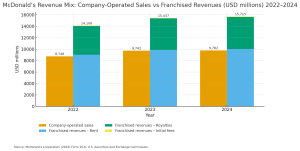
Figure 1 McDonald’s Revenue Mix, 2022 to 2024
Source: McDonald’s Corporation (2024) Form 10-K, U.S. Securities and Exchange Commission.
The chart shows how franchised revenue, particularly rent, has grown steadily in recent years.
Between 2022 and 2024, income from franchisees rose from 14.1 billion to 15.7 billion US dollars, while sales from company-operated outlets remained stable.
This demonstrates how McDonald’s property model provides dependable, inflation-resistant income that supports long-term growth.
Why This Model Works
Predictable income
Rental payments create reliable cash flow even when restaurant sales fluctuate. McDonald’s enjoys stable profits regardless of short-term economic changes.
Control and leverage
Owning the real estate gives McDonald’s influence over its franchise network. If a franchisee fails to meet standards, the company can step in to protect the site and its brand.
Asset appreciation
Property values usually rise over time. McDonald’s can also sell and lease back locations to release cash while retaining control, improving liquidity and flexibility (Bloomberg, 2023).
Lessons for UK Businesses and SMEs
McDonald’s success highlights how owning assets can give companies greater control and stability.
Invest in long-term assets
Whether you own a warehouse, shop or office, property can act as both a financial cushion and a source of leverage for funding.
Adopt a hybrid model
You do not have to own every property. Strategic ownership of high-footfall sites helps balance cash flow with growth opportunities.
Use property in funding applications
When seeking finance, include property as part of your proposal. Lenders often offer better rates on secured, asset-backed lending.
How Lend-In Supports Property and Commercial Finance
If you are planning to buy or refinance business premises, Lend-In helps you compare commercial finance options across trusted UK lenders.
Through one five-minute application, you can access tailored offers for commercial mortgages, property-backed loans, asset finance and sale-and-leaseback funding.
Lend-In is free to use, performs only soft searches and works exclusively with pre-vetted, regulated lenders. It helps businesses find affordable, transparent and ethical funding to support growth and stability.
Find out more at www.lend-in.io.
Conclusion
McDonald’s proves that owning property can be more profitable than selling products. The company’s strength lies in controlling the ground it trades on, building long-term security rather than relying on short-term sales.
For UK entrepreneurs, the lesson is simple. Use your assets wisely, secure property-backed funding where possible, and build a foundation that supports sustainable growth.
To explore funding options designed for your business, visit www.lend-in.io.
References
- Bloomberg (2023) McDonald’s Real Estate Dominance Drives Profit Stability. Bloomberg Markets, 19 July.
- Financial Times (2024) How McDonald’s Built a £40 Billion Property Empire. Financial Times, 22 March.
- Investopedia (2024) McDonald’s Business Model Explained. Investopedia, 8 February.
- McDonald’s Corporation (2024) Form 10-K Annual Report for the year ended 31 December 2024. U.S. Securities and Exchange Commission. Available at: https://www.sec.gov/Archives/edgar/data/63908/000006390825000012/mcd-20241231.htm (Accessed: 5 October 2025).
- Reuters (2024) How McDonald’s Makes More from Property than Burgers. Reuters Business, 12 March.